
Knife Sharpening Techniques
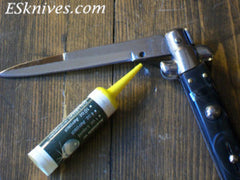 Need to sharpen a knife? We'll help you out with some tips. Knives are an intimate part of our family and our lifestyle, so we're always happy to help out.
 Sharpening a knife is sometimes perceived as the most difficult knife care task; and it probably is, but only until you learn a few tips that we'll share below.
General Knife Sharpening Instructions
Modern stainless steel is very hard and, when sharpened properly, will hold a good edge for a very long time. When sharpening a knife you must have a high quality sharpener that features a rough stock removal surface (preferably diamond abrasive) and a finishing surface of hard stone or ceramic abrasive. The diamond and ceramic materials will cut away the steel on the blade's cutting surface easily as these materials are much harder than steel. This makes it easier on you too. A hard stone will also perform this task, but the stone is only slightly harder than the steel and so this requires more effort on your part, although we find the extra time somewhat relaxing at times.
Pro tip: The specific angle is not as important as keeping a constant angle.
- Picking your angle: When using the rough grit stone use a shallower angle than when using the fine stone. That is, grind the (usually) sorry factory edge to a shallow angle with the rough grit stone and I want to stress here that there is no special way to do this because you are just removing useless stock from the blade. Just grind one side of the blade until it is ground down enough.
- What is enough? Well enough is defined like this: Once you have ground the blade down enough (maintaining the same angle all the while) to have touched the cutting edge, start to test the edge on the opposite side of the blade by running your finger nail at a 90 degree angle to the opposite edge moving from the back of the blade towards the edge. Why? Well you are trying to find the curled edge (or burr) created by the grinding down of the first edge. Once you have this curled lip along the edge from tip to tang then turn the knife over and begin grinding the other side until you have the same curled lip for that side. Once you are done you should have a roughly ground edge with a fairly shallow angle.
- The final touches: Now take your fine grit stone (at least 400 grit or finer) and raise the angle of the blade you just ground down by just a little more and using moderate pressure make a single cutting stroke maintaining as much as possible the same angle down the stone making sure to sharpen the whole length of the edge on the stroke. Now after one single stroke turn the knife over and repeat the same process. Do all this slowly and deliberately. Repeat this about 6 times and then begin to lighten the pressure on the blade as it strokes the stone. At about the 10th or 12th repetition about only the weight of the blade should be pressing on the stone.
- Testing the sharpness: After step 3 test the sharpness (carefully) by cutting a sheet of paper or (even more carefully) trying to shave a few hairs off your arm. If you followed step 2 faithfully you should have an almost razor sharp edge. If not then re-read step 2 and do it again from the course stone. Step 2 is most important. Step 3 actually does the sharpening.
- The more highly polished an edge the better it cuts. "Teeth" does not a razor edge make.
- IMPORTANT! Do not use water or oil of any kind on any stone to sharpen your knife. In fact if you have been using some liquid on your stone, wipe it off as best you can or get a new stone which has not been tainted with such a substance. I know this goes against years and years of trusted advise from friends, fathers, aunts, uncles, grandfathers and etc.... Trust me on this one.
 Subscribe to our feed









Comments